
Table of Contents
・Introduction: Seeking the "Light" Hidden in History's Shadows
・Historical Depths: The True Face of the Shinobi and Survival Intelligence
・Fictional Transformation: How the "Phantom" Was Born
・A Modern Perspective: Why They Endure as Universal Dark Heroes
・If They Walked Among Us: Connections to Modern Society and Gaming
・Common Myths and Misconceptions (FAQ)
。Conclusion: Serving the Light from the Shadows
■ 1. Introduction: Searching for Light in the Shadows of History
Welcome to the "Cyber Archive," Handler. I am Shino, your librarian.
Let me ask you a question: When you hear the word "Ninja," what comes to mind? Is it a superhero unleashing elemental magic? Or is it a cold-blooded assassin lurking in historical shadows?
In truth, this disconnect between image and reality is the very reason Ninjas have remained relevant for centuries.
Historically, they were never the center of attention. Yet, today, they are celebrated across borders as the ultimate "Dark Heroes." How did a low-profile intelligence operative evolve into a global icon that captivates the world?
In this article, I will use our library's vast historical data combined with modern pop-culture analysis to decode the true identity of the "Evolving Phantom."
By the time you finish reading, the Ninja characters you play in games and the concept of "stealth" in modern society will take on a completely new depth. Now, let us dive into the shadows of history.
■ 2. Deep Dive: The Real "Shinobi" and Survival Intelligence
【The Mission: Information over Combat】
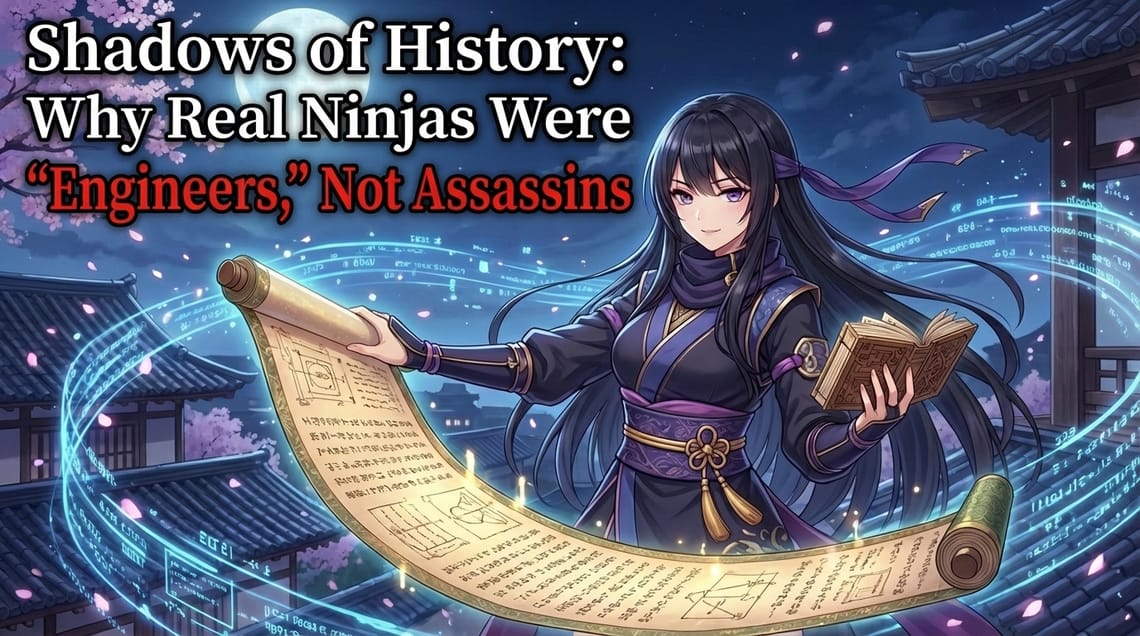
First, let us establish the facts. Originating from resistance groups in the late 13th century, the "Shinobi" (historically known as Rappa, Suppa, or Kanjya) were not frontline warriors. They were specialists in information warfare.
From the Warring States period to the Edo period, their priority was never to slay the enemy. It was to "survive and bring the intel home."
Unlike the Samurai, who often found glory in an honorable death, the Shinobi specialized in escape and survival. For them, combat was merely a last resort when a mission went wrong.
【The Weapon: "Intellect" as the Ultimate Survival Tool】
"Ninjutsu" was not magic. It was a highly logical comprehensive survival science. When we analyze historical texts like the Bansenshukai, we find that the required skill set was shockingly academic:
・Psychology & Rhetoric: The ability to manipulate conversations and extract secrets.
・Pharmacology & Medicine: Creating poisons, medicines, and preserved foods (Ration pills).
・Meteorology & Astronomy: Predicting weather to utilize storms or darkness for cover.
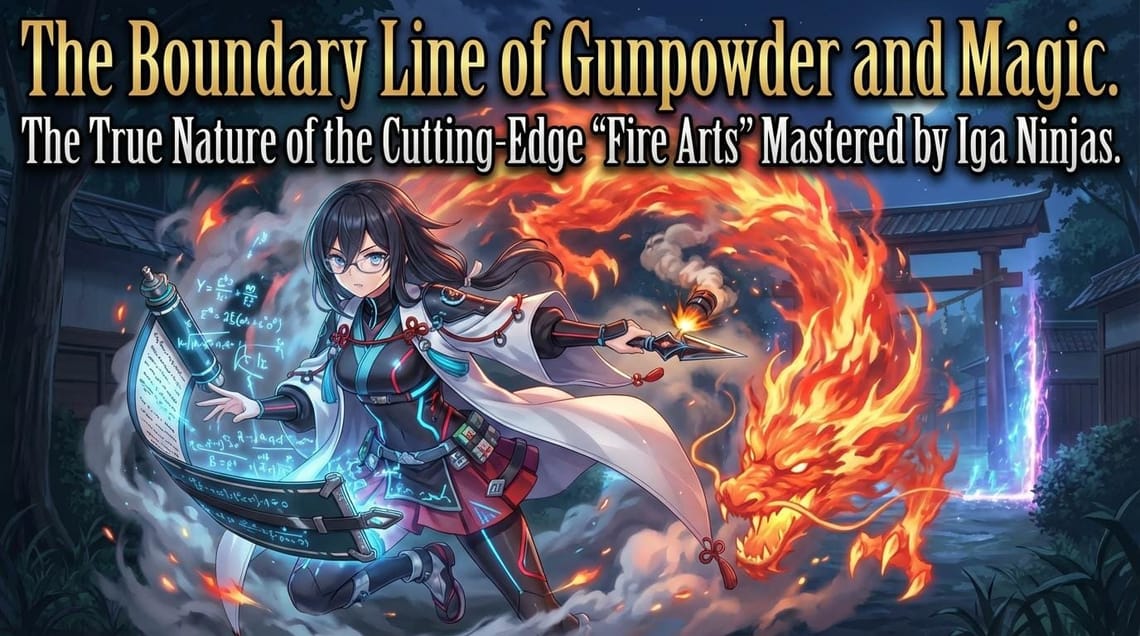
・Pyrotechnics: Handling gunpowder and smoke signals.
They were, in essence, the high-tech engineering corps of their time—an elite group defined by their intelligence.
【The Difference from Samurai: The Pride of the Shadow】
While Samurai sought visible achievements like "family honor" or "taking an enemy commander's head," the Shinobi dedicated "results (Intelligence)" alone to their lords.
Even if their names were never recorded in history, they completed the mission to protect the state. This thorough professionalism and spirit of self-sacrifice resonates deeply with the "craftsman spirit" or the unsung heroes of modern organizations.
[Shino's Archive (Trivia Data)] Did they really wear black? Historical Ninjas actually disguised themselves as farmers or merchants to blend in. An all-black outfit would look suspicious in a crowd. Even at night, navy blue or persimmon-dyed fabrics were preferred as they blended better with the darkness than pure black. The iconic black suit is largely a fiction.
■ 3. The Shift to Fiction: How the "Phantom" Was Born
【The Edo Period: Kabuki and the "Black Suit"】
Where did the image of the "NINJA" we know today come from? The turning point was the Edo Period. As wars ended and the need for spies diminished, they became subjects of entertainment.
・The Kabuki Influence: In Japanese theater, stagehands known as "Kurogo" dress in black to signify they are invisible to the audience. To depict a "stealthy ninja," actors adopted this outfit. This is the origin of the Black Shozoku (suit).
・The Shift to Sorcery: In literature and woodblock prints, they began to be depicted as sorcerers who could summon giant toads or vanish into thin air. This is the root of the "Ninjutsu equals Magic" trope.
【The Modern Era: From "Sanada Ten Braves" to Global Icon】
In the early 20th century, novels like the Sanada Ten Braves became massive hits in Japan. Characters like Sasuke Sarutobi transformed the Ninja from "grim assassins" into "superpowered heroes for the youth."
Later, the 1980s movie boom (starring actors like Sho Kosugi) and the explosion of manga/anime exported this image to the West.
The fusion of "human conflict" (depicted by authors like Ryotaro Shiba) and the "mysterious oriental warrior" (favored by Hollywood) established the global "NINJA" brand we recognize today.
■ 4. Modern Perspective: Why We Love the "Dark Hero"
The mixture of the "historical spy" and the "fictional sorcerer" has created the ultimate Dark Hero. Let us analyze the psychology behind this appeal.
【Beyond Good and Evil: The Anti-Hero Allure】
Heroes who fight purely for "Justice" can sometimes feel too bright for our complex modern society. Ninjas, however, embrace the "ends justify the means" philosophy. They use poison, deception, and shadows. Yet, they possess a unique code of honor—loyalty to their lord or their clan.
This figure, living in the gray zone between good and evil, strikes a chord with modern people who navigate their own moral contradictions.
【Empathy for Imperfection: Trauma and Solitude】
As seen in works like NARUTO, modern Ninja stories often focus on personal struggle.
・Trauma caused by a cruel destiny. ・The conflict between the Organization (The Village) and the Individual (Emotion). ・The loneliness of being misunderstood.
They possess superhuman power, yet their hearts are scarred. This gap between strength and fragility evokes deep empathy.
【The Aesthetic of Anonymity: The Catharsis of the "Nobody"】
Ninjas often hide their faces. This is a symbol of anonymity. A "nobody" using wit and skill to overthrow a massive power or a great evil. This structure offers a catharsis similar to the modern internet culture of anonymous justice—the idea that "the have-nots can defeat the giants using skill and intellect."
■ 5. If They Were Here Now: Gaming & Business Connections
【Gaming Interpretation: The High-Mobility Debuffer】
If we define a "Ninja" using modern RPG or MOBA terminology, they are rarely simple tanks or warriors.
・Class: Assassin / Trickster
・Skill Set:
- Stealth: Approaching while untargetable.
- Debuff: Weakening enemies with poison, confusion, or blinding.
- High Mobility: Wall-running and clones (avoidance tanking).
・Role: Instead of a frontal assault, they are the roamers who dismantle the enemy backline.
Gamers love Ninjas because they offer "technical victories based on player skill." They satisfy the desire for an intellectual win rather than brute force.
【Business Interpretation: The "Information Architect"】
Who are the descendants of the Ninja in the modern business world?
・Lobbyists & Coordinators: Those who gather intel on decision-makers and smooth things over before the official meeting (Nemawashi).
・Cybersecurity Experts: Those who protect the system from the shadows (backend) and prevent trouble before it happens.
・Market Researchers: Those who blend into the market (the city) to uncover consumer insights (enemy intel).
What they share is the realization that "Information is a weapon" and the professionalism to "achieve results from behind the scenes." Walking the path of the Ninja today means managing organizational risk with high-level expertise.
■ 6. Common Misconceptions (FAQ)
Here are answers to some common questions I receive at the library.
Q. Was the Shuriken really their primary weapon? A. No, it was a distraction tool. Shuriken were primarily used for "distraction" during an escape or for self-defense. They were used to stop a pursuer's movement or force them to flinch, rather than to kill. While portable, their lethality was low compared to swords or spears.
Q. Do Ninjas still exist today? A. "Professional Ninjas" do not, but "Inheritors of the Spirit" do. The intelligence organizations of the feudal era are gone. However, there are practitioners of Ninjutsu as a martial art (Bujinkan, etc.) who preserve the physical techniques and philosophy. In a broader sense, the intelligence officers and special forces of today could be considered the modern equivalent.
■ 7. Summary: The Essence of the Ninja
To summarize today's lecture:
- Historical Shinobi were an elite intelligence corps weaponizing "Intellect" and "Survival Science."
- The modern "NINJA" is an "Evolving Phantom" cultivated over centuries by theater and fiction.
- Their core appeal lies in their "Dark Hero" nature—struggling in the moral gray zone while fighting the world with individual skill.
The Ninja was born from the soil of history and watered by the rain of fiction. They are not merely relics of the past. They are an answer to the universal question: "How do the powerless survive using wisdom and technique?" That is why we are forever drawn to their shadow.
▼ Dive into the World (Recommended Games)
Shino: "That concludes today's lecture. Take this knowledge and dive into the following worlds. These archives offer a fantastic experience of the Shinobi's 'velocity' and 'way of life'."
[Ninja Must Die]
- Official Site: Ninja Must Die
- Experience: A stylish side-scrolling action game focusing on "running" and "combat." It perfectly captures the aesthetic of "High Mobility, Glass Cannon, One-Hit Kill" with beautiful ink-wash visuals.
[Ninja to Gokudo (Ninja and Yakuza)]
- Official Site: Comic DAYS (Manga)
- Experience: The extreme edge of the "Hyper-Evolved Ninja." It depicts a death match between modern-day Ninjas and Yakuza. It fuses the "ruthlessness" of history with the "absurdity" of fiction into a high-heat dark hero story.